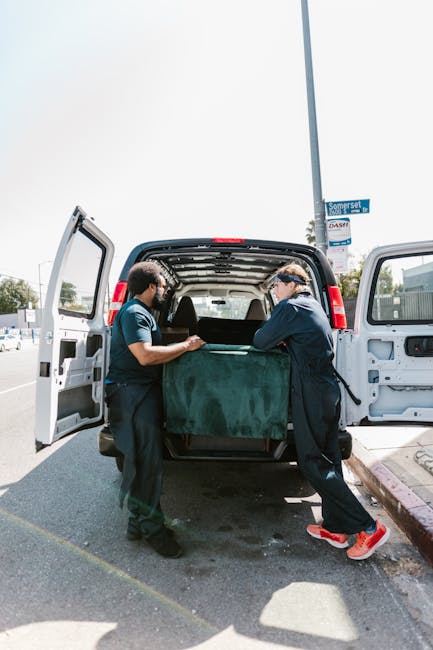
Man With A Van in Finsbury

Need a man with a van in Finsbury for moving furniture, carrying household items or handling a straightforward local relocation? We provide a practical removal service that suits smaller loads, single items and carefully planned moves across the area. The focus is on safe loading, sensible transport and tidy unloading, with clear communication throughout. If you need support with a flat move, a student move or a few bulky pieces that will not fit in a car, this service keeps the process simple.
The work can include lifting, carrying, secure positioning in the van and delivery to your chosen destination. Where needed, we can also support preparation with packing and unpacking services so boxed items, fragile belongings and mixed household contents are organised before the move begins. That gives you one joined-up service instead of several disconnected arrangements. For many customers, the value is not just transport, but having a careful pair of hands alongside a suitable vehicle.
Use this page to understand the main service, what it typically covers and how to request a quotation that reflects the job in front of you. Whether you are moving one room of furniture, clearing out a property or arranging an office delivery, the aim is to keep the booking process straightforward and the move itself well controlled. If you know what needs to go, a clear enquiry is usually the best starting point. Tell us what you need moved and where it is going.
What our man and van service covers
A man and van service is often the right fit when the load is too awkward for ordinary transport, but does not call for a full-scale removal team and lorry. It is useful for furniture, boxed belongings, appliances, retail stock and mixed items that need careful handling. The service can be arranged for collection from a property, storage unit, office or retail premises, then delivered to another address with the same attention to loading order and item protection.
We keep the work focused on the practical parts of moving: lifting from the property, using the van space efficiently and unloading in the right place at the destination. If the move involves household items that need transferring between homes, the relevant home moves page may help you see how domestic moves are approached alongside a man with a van booking. The important point is to match the service to the size and complexity of the job, rather than paying for capacity you do not need.
Typical requests include wardrobes, beds, sofas, tables, boxed contents, bags, suitcases and combination loads that benefit from a vehicle with flexible space. For many customers, the key decision is whether the move is best handled as one trip or several smaller collections. That choice affects the planning more than the distance alone. If the items are heavy, fragile or awkwardly shaped, it is sensible to mention that early so the loading approach can be set out clearly.
Furniture, household loads and local removals

Furniture moves are one of the most common uses for a man and van. A single sofa, dining set or bed frame may be all that is needed, especially when access is manageable and the journey is local. We can also help with mixed household loads where the contents are not quite enough for a full house removal but still need a proper van and careful handling. The service is particularly useful when items must be taken up stairs, through narrow hallways or out of properties with limited access.
For larger domestic jobs, the distinction between a few items and a partial move matters. The house removals page suits customers who are moving a broader household load and want to understand how that type of move is handled. By contrast, a man with a van arrangement can be more flexible for one-off collections, follow-on trips or specific rooms of furniture. Either way, the goal is to move belongings safely and in a sensible sequence.
When loads include a mix of furniture and boxes, it helps to think about shape as well as weight. Flat-packed items, assembled furniture, mirrors and soft furnishings all behave differently in a van and may need to be loaded in a particular order.
- heavier items can create a stable base
- softer goods can fill gaps without being crushed
- fragile pieces should be separated and secured
Office, business and equipment transport
Commercial jobs with careful handling

Businesses often need a reliable way to move stock, files, display pieces or office furniture without disrupting the whole working day. A man and van arrangement can be well suited to these smaller commercial tasks because it offers flexibility while still giving enough carrying capacity for grouped items. It can also support relocations between nearby premises, equipment deliveries and ad hoc transport when items need to arrive in a specific order.
If your move relates to a workplace rather than a home, the office removals page gives a clearer picture of how business premises can be handled as a structured move. For lighter business transport, a van-based service can be enough on its own, especially when you are moving desks, chairs, boxed paperwork or compact equipment. The main benefit is that the transport can be matched to the amount of freight without turning the task into something unnecessarily large.
Commercial customers often need timing and item separation to be considered together. Files should stay grouped, display items should not be mixed with loose hardware, and the order of unloading may matter if the destination is an office, workshop or storage space. Clear labelling helps, but it is not a substitute for a sensible loading plan. A well-organised man with a van service can make those details easier to manage without overcomplicating the booking.
How to request a quotation
A good quotation starts with a clear description of the items, access points and destinations involved. If you can explain what needs collecting, whether there are stairs or lifts, and how far the parking is from the property, it becomes easier to outline the work accurately. You do not need to overstate the details, but you should mention anything that affects lifting, carrying time or vehicle access. That helps the estimate reflect the practical shape of the job.
It is also sensible to say whether the move is a single collection, a return journey, or a set of trips spread over the day. If the items are unusual in size or shape, a brief note can help us decide whether the load is best handled as part of a general moving van arrangement or as a more specific removal task. For a straightforward enquiry, a concise list of items is often enough to begin.
When you are ready, ask for a quotation and include the essentials in one message so the response can be as useful as possible. If you are comparing options, keep the request focused on what is actually being moved and where it is going. The clearer the load description, the easier it is to quote with confidence. A short, practical enquiry is usually the quickest route to a useful price.
About Finsbury
Finsbury is an inner London district in the London Borough of Islington, close to the City and shaped by centuries of change from a historic suburban edge into a dense urban neighbourhood. The area takes its name from Finsbury Fields, once open ground north of the City walls, and its modern identity is tied to the gradual infilling of streets, squares and terraces during the eighteenth and nineteenth centuries. Much of Finsbury today sits among highly urban surroundings, yet it still carries traces of earlier layouts in the pattern of roads, estates and public spaces. Clerkenwell lies immediately to the west, while the broader Borough of Islington stretches northward, making Finsbury part of a compact central London landscape with strong links to neighbouring districts.
Moving support for flats, landlords and clear-outs
Flats and smaller properties often call for a more selective approach than a full house move. Lifts, stairwells, tight entrances and shared access spaces can influence how the job is planned, especially when large furniture has to pass through communal areas. A man with a van service is often a good fit because it can handle the load without bringing in unnecessary vehicle size. This is useful for tenants moving in or out, landlords arranging changeovers and anyone shifting contents between addresses.
There are also situations where the job is less about a conventional move and more about removing items that are no longer wanted. Our furniture pick-up page is relevant when a sofa, bed, wardrobe or other bulky item needs collecting rather than relocating as part of a home move. That can be paired with wider van transport when there are extra belongings to move at the same time. It keeps the process simple when the main need is collection and delivery rather than a full removal programme.
Useful preparation is limited to two practical points. First, separate the items that are definitely going, as that avoids confusion on the day. Second, make sure any access details that affect carrying are mentioned early, such as restricted parking, stair access or shared entrances. Those basics are usually enough to make the work run more smoothly. You do not need to create a long inventory unless the job itself is complex.
Vehicle choice, loading order and price factors

Different loads call for different use of space, and the right vehicle choice is usually about the shape of the job rather than just the number of items. A compact set of boxes may be moved alongside one or two larger pieces, while a full van can be better for bulky furniture or layered household contents. Our moving van page gives another way to think about transport capacity if you are planning a move that relies mainly on the vehicle rather than a large crew. The practical question is always how the goods can be loaded safely and delivered in good order.
Price is usually influenced by several straightforward factors: the volume of items, the time needed to load and unload, the distance between addresses, and any access difficulties that slow the work. Items that are especially heavy, awkward or fragile may also affect planning because they can require more care or a different loading sequence. A careful quote should reflect these realities rather than relying on a one-size-fits-all figure. That is why detailed but concise information is more useful than broad estimates.
When you are comparing services, consider what is included in the work itself. Some jobs only need transport, while others may benefit from help with carrying, positioning or limited packing support. A van-based removal service is often best when you want a straightforward, workable arrangement that stays focused on the goods being moved. If the task is modest, there is usually no need to overcomplicate it; the key is to choose a service that matches the load.
Related removal options
Some customers start with a general man and van enquiry and then realise the move needs a slightly different type of support. If the job becomes a broader domestic relocation, the house movers page may be useful because it sits closer to full-home moving work. If, instead, the move is a commercial one, business premises and office items are better aligned with the sort of structured service described on the office pages. Choosing the nearest fit at the outset helps avoid underplanning or paying for the wrong type of vehicle.
There are also broader service pages that explain the company’s moving work in a wider sense, including the main removals page and the more general removal services page. These can be helpful if you are not yet sure whether your enquiry belongs under a man with a van arrangement, a house move or a more formal removal. The distinction is practical, not technical: it is about the size of the load, the number of items and the amount of handling needed.
For loads that involve repeated collection, onward transport or a combination of household and business items, it is worth deciding the order of movement before the day itself. Planning the sequence can matter as much as planning the route. That is especially true when one destination has limited parking or the items at each stop need to be unloaded in a particular order. Good sequencing saves unnecessary lifting.
Practical transport for mixed loads

Mixed loads often sit between a simple courier-style job and a full removals booking. They might include a chest of drawers, several boxes, a chair, some bags and one or two items that need extra care. That is where a man with a van service can be especially useful, because it combines vehicle space with the hands-on handling needed for items that do not travel well on their own. The emphasis is on keeping the load stable, accessible and delivered without unnecessary delay.
For customers who are moving belongings from storage, buying second-hand furniture or shifting items after a sale, a van-based arrangement can keep the process convenient. The main thing is to describe the load honestly so the right size of vehicle and the right amount of handling can be planned. If the move also involves rubbish, recycling or unwanted items, separate arrangements may be more appropriate than trying to fold everything into one transport job. Keeping the purpose of the journey clear helps avoid confusion.
If you are ready to move ahead, send the details and contact us for a quotation. You can also ask about pricing and service options through the dedicated pricing and quotes page if you want to frame the enquiry more precisely. A short message with the item list, pickup point and delivery address is usually enough to begin. Tell us what needs moving, and we will help shape the next step.